THE GOOD CATCH BLOG
Leaving Your Florida Home? A Quick Plumbing Checklist
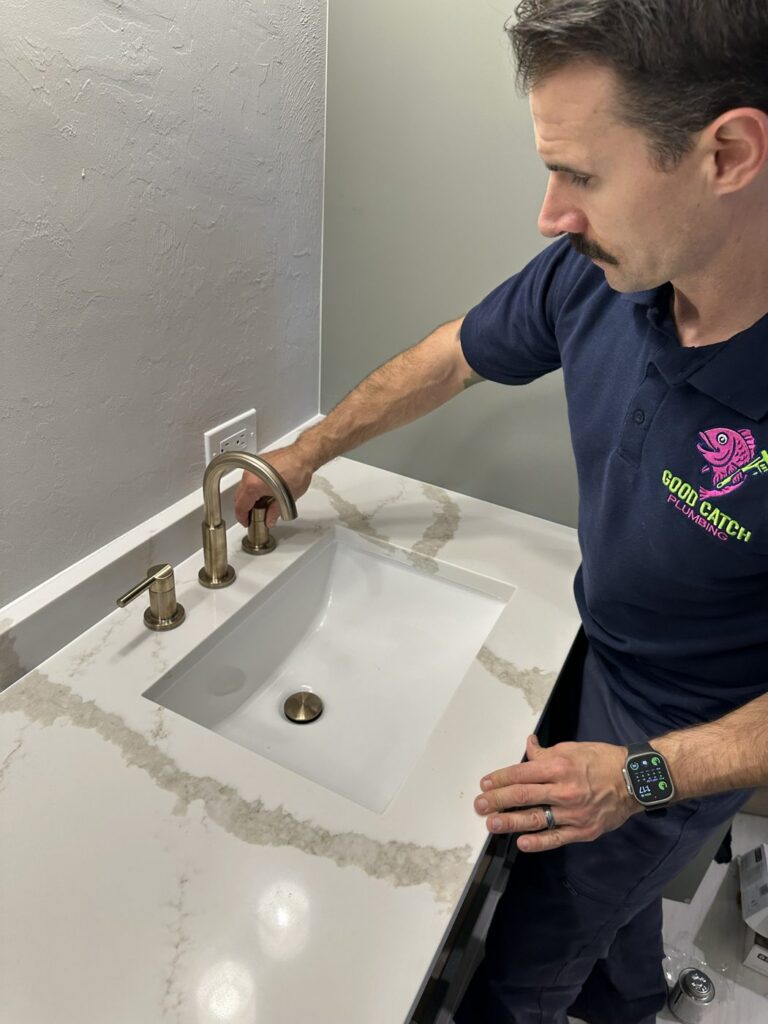
Heading north or leaving your Southwest Florida home empty for a while? A plumbing check before you go can help you catch small problems while someone is still there to handle them. Start with these five steps.
Before you lock up
- Check for small leaks. Look under sinks, around toilets, and beside the water heater. Drips, damp cabinets, loose connections, or a toilet that keeps refilling deserve attention before an extended absence.
- Make a water shutoff plan. Ask Good Catch whether shutting off the domestic water supply is appropriate for your home. Account for fire sprinklers, irrigation, and any equipment that needs water. In a condo, coordinate with the building manager.
- Set up the water heater correctly. Follow the manufacturer’s vacation or shutdown instructions for your model. Do not guess at breaker, gas, or valve settings. Your plumber can help coordinate the heater with your water shutoff plan.
- Consider leak alerts. Moisture sensors or a compatible automatic shutoff system can help detect trouble. Test alerts, check batteries, and make sure a local contact can respond if you are away.
- Arrange access. Give your property manager or trusted contact the shutoff location and Good Catch’s number. Agree on who can authorize a repair and let a technician into the home.
When you return
Check for leaks as water service is restored. Faucets and showers that have sat unused need attention too: the CDC recommends flushing fixtures after a week or more without use. Follow its home flushing guidance and any local water advisory. Ask us about a reopening check if the home has been vacant for months.
Leave with a clear plan
Good Catch Plumbing helps Sanibel and Southwest Florida homeowners with residential plumbing repairs and maintenance. Call (239) 246-3747 or request a visit before you leave for the season.
Learn more: EPA guidance on leak detection devices.