Backflow Prevention
Testing, certification, and repair.
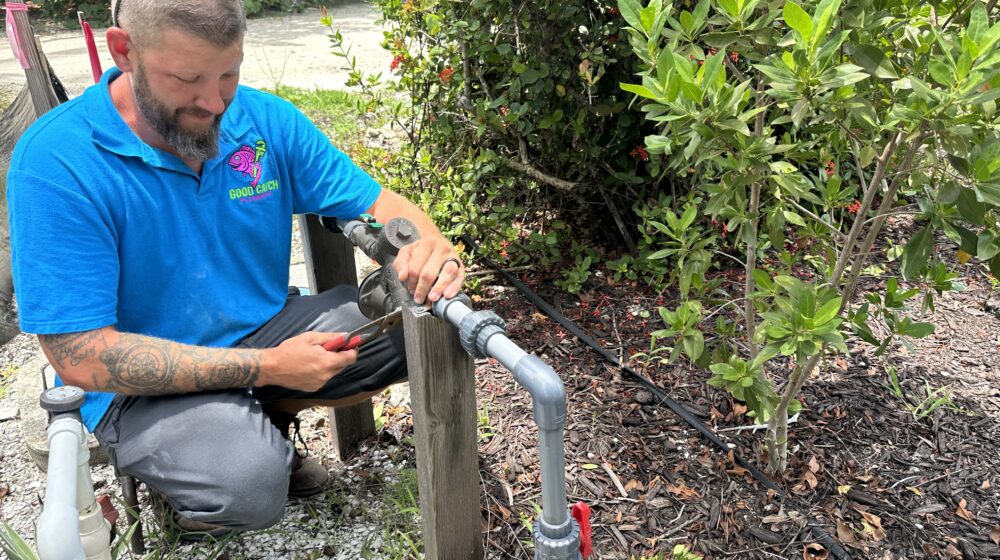
Coastal-grade work, done right.
Backflow can pull contaminants into your drinking water and is a genuine health risk — which is why Florida requires annual testing on many properties. Our certified technicians test, certify, repair, and install backflow assemblies, and we handle the county paperwork and reporting so you stay compliant without the hassle. If your assembly fails, we can usually rebuild or replace it the same day and re-submit the certification for you.
A backflow preventer is the one device standing between the water you drink and everything your irrigation lines, well, or pool auto-fill connect to. When pressure in the main drops — a water main break, heavy demand during dry season, a hydrant opening down the street — water can reverse direction and pull lawn chemicals, fertilizer, or standing irrigation water back toward your home and the public supply. The assembly’s job is to close before that happens.
Because that protection matters, most water utilities in Southwest Florida require backflow assemblies to be tested and certified every year by a licensed tester. Good Catch Plumbing handles the whole process: the annual test, the certification paperwork your utility keeps on file, and any repair or replacement if the assembly fails. You deal with one licensed contractor from start to finish instead of coordinating a separate tester and plumber.
Signs your backflow assembly needs attention
A test-due notice from your utility
Most Southwest Florida water providers mail an annual reminder that your backflow assembly must be tested and certified. If you have one in hand, a licensed tester has to sign off before the deadline on the letter.
Water dripping from the relief valve
A reduced-pressure assembly has a small relief port on the underside. Constant dripping or spitting from it usually means an internal check valve or the relief valve has failed and needs a rebuild.
A puddle or corrosion at the device
Standing water, or green and white crust on the brass body near your irrigation shutoff, points to salt-air corrosion or a failing seal. Left alone it turns into a leak and a failed test.
Discolored or off-tasting water
A rusty tint, cloudiness, or a chemical or sulfur smell can signal a cross-connection somewhere in your plumbing. It is worth having the cause traced, and your backflow assembly checked, rather than ignored.
A new irrigation, well, or pool line
Adding a sprinkler system, well, pool auto-fill, or outdoor water feature typically requires a backflow device installed and permitted before it can legally connect to your water supply.
A failed or missing device at closing
Home inspections and utility records often flag a backflow assembly that is missing, expired, or has failed testing. It usually needs to be corrected before the account transfers cleanly.
What's included
- Certified annual testing
- County reporting & compliance paperwork
- Assembly repair and rebuilds
- New backflow installations
How Good Catch handles backflow testing, certification, and repair
Backflow prevention is precise, code-driven work, and Florida requires it to be done by someone licensed for it. Good Catch Plumbing is a Florida Certified Plumbing Contractor (license #CFC1434636), so the same team that tests your assembly can legally repair or replace it. You are not bounced between a tester and a plumber to get back into compliance.
What the annual test actually involves
We connect a calibrated test gauge to the assembly and check each component: the two independent check valves, the relief valve on a reduced-pressure (RPZ) assembly, and the shutoffs. The test confirms each check holds tight against reverse flow and that the relief valve opens at the correct pressure. It is a short visit, and we record the readings on the form your utility requires.
Submitting your certification
A passing test only counts once the paperwork reaches your water provider. We complete the certification with the gauge readings and the assembly’s make, model, and serial number, then submit it to your utility so your account stays in good standing. You get a copy for your own records.
Repair before replacement, when it makes sense
If an assembly fails, the fix is often a rebuild rather than a full replacement. Most testable assemblies accept manufacturer repair kits — new rubber seats, springs, and O-rings — that bring a corroded or fouled valve back to passing. We rebuild when the body is sound. When the brass is cracked, badly corroded, or the model is obsolete and parts are gone, we tell you straight and quote a proper replacement.
Installing a new assembly
For a new irrigation zone, well, or pool auto-fill, we size and install the correct assembly for the application: a double check for lower-hazard connections, or an RPZ where the hazard is higher, such as irrigation that uses fertilizer injection or reclaimed water. We set it above grade at an accessible height, downstream of the meter, and pull the permit where your jurisdiction requires one.
What is different about Southwest Florida
A few local realities make backflow work here its own animal:
- Salt air off the Gulf is hard on brass. Assemblies in Sanibel, Captiva, and other coastal areas corrode faster, so seals and shutoffs can wear out sooner than the calendar suggests.
- Our hard, mineral-heavy water leaves scale inside the assembly that can hold a check valve open or seize a relief valve — a common reason a device that passed last year fails this year.
- Irrigation is nearly universal here, and many systems run on reclaimed water, which raises the hazard level and often calls for an RPZ rather than a simpler device.
- Seasonal and snowbird homes sit unused for months. Stagnant water and dried-out seals tend to show up at the next test, so a check before you head north is worth it.
Whether you need a routine annual certification or an assembly that failed and has to be brought back into compliance, we handle it end to end across Sanibel, Captiva, Naples, Marco Island, Bonita Springs, Estero, Fort Myers, and Cape Coral.
How it works
-
1
Call or Book
Reach a real person and tell us what’s going on. We’ll schedule a time that works for you.
-
2
Diagnose & Quote
We inspect, explain the real issue in plain language, and give you an upfront price.
-
3
Fix It Right
We do the work cleanly, test it, and stand behind it with our guarantee.
Why choose Good Catch
Certified to test and fix
As a Florida Certified Plumbing Contractor, we can test your assembly and repair or replace it on the same visit, with no juggling a separate tester and plumber.
We handle the utility paperwork
We complete your certification form and submit the results to your water provider, so your account stays compliant without you chasing forms.
Local to the coast
We are based in Sanibel and serve the whole coast, and we know how salt air and hard water wear these assemblies down.
Rebuild before replace
When a repair kit will bring your assembly back to passing, that is what we recommend. We only quote a replacement when the unit genuinely cannot be saved.
Questions
Questions about Backflow Prevention
How often does my backflow preventer need to be tested?
What does a backflow preventer actually do?
Water is dripping from my backflow device. Is that a problem?
Can you repair my backflow assembly, or do I need a new one?
Do you submit the test results to my water company?
Where should my backflow assembly be installed?
Ready to book your service?
Call us or request a visit — we serve all of Southwest Florida, 7 days a week.